


Extending the (Physics-Based) Thomas Stieber Shaly Sand Model by Refining Rock Type Input Properties and Computing Calibrated Permeability from Triple Combo Logs
Downtown Houston
Speaker:
Seminar Date: Jun 18 2026
Registration Opens: May 17 2026 - Jun 19 2026
Time: 12:00 PM - 01:00 PM (US CDT)
Admission/Registration Link: None
Donation Link: Donate Here
Meeting/Webinar Link: None
Contact: Andrew Hind (VP Downtown, SPWLA Houston Chapter)
Corresponding: vpdowntown@spwla-houston.org
Fees: FREE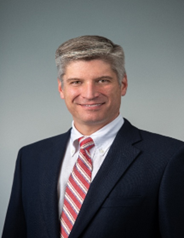
ABSTRACT:
SEM images obtained from whole core plug-scale thin sections exhibit how two of the original five assumptions in Thomas-Stieber’s legendary 1975 publication are verifiably violated in a low-energy depositional environment on Alaska’s North Slope. As a result, the legacy Thomas Stieber (T-S) model is extended to allow for an independent estimate of any reservoir’s Dispersed Clay Porosity. A five-bin ‘rock-type’ of NMR free fluid data is laid over the Shale Volume and Total Porosity triangle inputs, which indicates NMR data is useful to characterize the additional Dispersed shale types identified by Triple Combo log-scale measurements. Permeability can now be directly computed from the updated T-S triangle and model results exhibit a strong correlation to both Wireline NMR Timur Coates (T-C) model and Klinkenberg-corrected core plug data ranging from ~0.1-100 mD. One outcome of this research suggests that, as required, NMR permeability may be collected periodically across the field in order to calibrate Development Well Triple Combo interpreted permeabilities back to cored well data and increase confidence that static & dynamic reservoir model updates are indeed maximizing strategic exploitation of maturing reservoirs throughout field life.
BIOGRAPHY:
William Horvath is a Petroleum Engineer and master’s degree candidate at The University of Houston, specializing in asset-level petrophysical support for conventional and unconventional reservoirs. His work integrates Routine Core Analysis and advanced Special Core Analysis measurements with complex static and dynamic models used to impact major capital project economics. William brings over 20 years of oilfield and engineering experience to his research, developing many facets of shaly sand petrophysical engineering expertise with Royal Dutch Shell and Baker Hughes INTEQ in the Gulf of America, as well as Oil Search and Halliburton Sperry in Alaska. In addition to working toward completing his M.S. in Petroleum Engineering at UH, William holds a B.S. in Chemical Engineering from Northeastern University and an M.B.A. with Finance Concentration from Tulane University. His current projects include Ultrasonic Caliper processing, Acoustic Semblance processing, and Advanced Service LQC across the diverse reservoir landscape of the Alaskan Cook Inlet and North Slope basins.